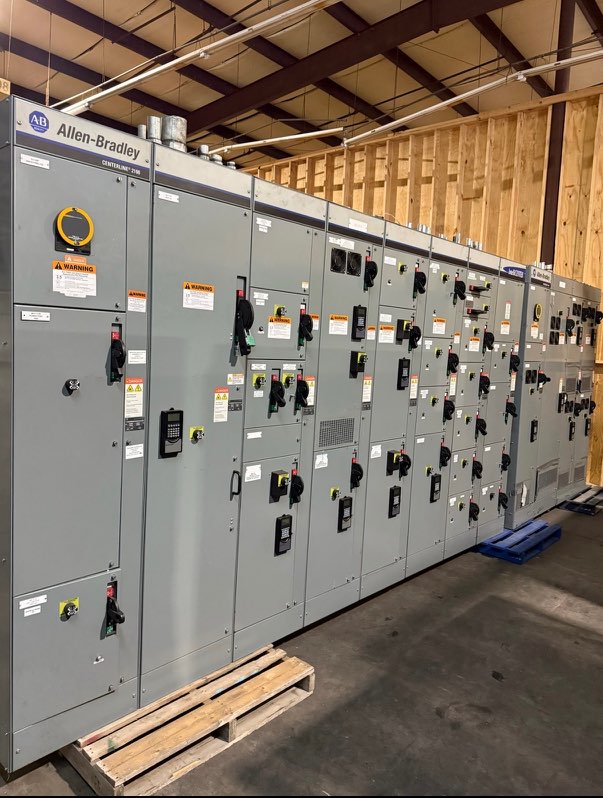
A business with switchgear or other distribution equipment in Ardmore, Oklahoma, can request a review of its proposed surplus and discuss pickup directly. For example, if the lot includes electrical busway and bus duct, distinguish those assets from other items and describe their actual location. We buy used, surplus and decommissioned electrical equipment; we do not sell gear. We consider all voltage classes, subject to review. For a warehouse manager consolidating stored equipment, the useful starting point is storage history and the difference between an unknown and a defect. Identify what is actually offered, share what is known and leave uncertain details unguessed. An offer depends on the specific equipment, condition, access and agreement between the parties.
Describe the switchgear lineup
Switchgear is generally identified as a group of protective and switching equipment, often arranged in sections. Describe the lineup as a whole, but list distinct sections and loose breakers separately when you can. Existing records or an exterior view may show the manufacturer, model, ratings and section count. A single photograph of a long lineup may not show everything included.
State whether the lineup is still installed or has already been removed, and identify any obviously absent sections or loose components. Use words such as unknown when you cannot verify a detail. A buyer needs to understand the actual scope, not assume that every compartment is complete or that a label on one breaker describes the entire lineup.
If your Ardmore inventory includes electrical busway and bus duct
Busway, also called bus duct, is a power-distribution assembly whose sale may involve straight sections and fittings rather than a single cabinet. Record quantities, existing length information, the manufacturer and visible ratings for each identifiable group. If elbows, tap boxes or other fittings are included, list them separately instead of assuming that all pieces are interchangeable.
Distinguish packaged spare sections from busway still installed in a building, and tell the buyer whether the pieces belong to one system or several. Existing plans or a storage inventory may be useful where lengths cannot be confirmed. Do not climb, open covers or disturb an installation to collect details; a partial list is a reasonable starting point.
Explain storage history
A warehouse manager can distinguish known storage conditions from an earlier period that is undocumented. Say whether an item was packaged, stored indoors or outdoors when known, and identify visible exterior damage without inferring how it performs. Separate equipment with different histories into distinct inventory lines, even if the items look alike.
An unknown history is not the same as confirmed damage, and intact packaging is not proof of operating condition. Attach existing labels or records to the correct item and disclose missing accessories. The buyer can consider the list without requiring the warehouse to open, energize or test the gear.
If relevant: Describe exposure and visible condition
Outdoor storage is a useful fact to disclose, not a diagnosis of electrical condition. Give the approximate storage period if known, whether the item was covered, and any visible exterior damage, corrosion or missing panels that can be observed safely. If the storage history before your ownership is unknown, distinguish that uncertainty from the period you can describe.
If several assemblies have different histories, make separate inventory lines instead of describing the whole lot as identically stored. Existing photographs may help show condition and packaging. Do not test, open, clean or move equipment to make it look better; offer the buyer an accurate description and let the review determine interest.
If relevant: Plan for separate release dates
When equipment becomes available in stages, identify each group and its tentative release date rather than treating the whole inventory as ready now. Note dependencies such as owner approval, another contractor's schedule or equipment that must remain in service. If a date is uncertain, label it as an estimate and update the buyer when it changes.
Clarify whether the proposed transaction covers all stages or only a particular group. An accepted deal should establish the agreed scope, upfront payment and a coordination plan for the buyer-handled qualified disconnects and logistics. Do not assume that separate sites or later stages automatically share one pickup appointment.
Link records to the actual equipment
An asset tag or existing inventory number can connect a description, photograph and location without turning every item into a separate narrative. Give quantities and identify what is included, excluded or missing. Manufacturer and model are helpful when known, while voltage and amperage should be associated with the particular label or device they describe.
Safe exterior photos and existing documents may provide a useful starting point. A drawing can be out of date and one breaker label does not necessarily describe a whole lineup, so identify the source of each claim. If the label cannot be reached safely or the history is uncertain, tell the buyer rather than guessing.
Confirm who can release the assets
A clear proposal identifies the authorized seller, the specific items offered and any parts that are not included. Different owners, tenants, contractors or lenders may have an interest in different assets, so disclose known restrictions and approval requirements. Use a separate entry for each site or equipment group when authority or availability differs.
State whether items are still installed, already removed or stored, and provide your best known release window as an estimate. Other project work can affect the handoff. Both sides should agree on the actual scope and schedule rather than assuming that a preliminary inventory or a hoped-for date is final.
From review to an agreed offer
This is a buying-only business; it does not sell electrical equipment. It considers used, surplus and decommissioned gear across all voltage classes, including switchgear from decommissioned data centers and shut-down power plants. A buyer reviews the actual equipment, condition, information and proposed scope before deciding whether to make an offer; no individual item is guaranteed acceptance.
If the parties agree on a deal, the buyer pays upfront before pickup. Confirm the agreed price, payment method, items included, any exclusions and timing with the authorized seller. A preliminary inquiry or estimate is not a completed transaction. Ask for clarification before accepting an offer if the proposed scope or payment terms are unclear.
Prepare the handoff, not the equipment
For an accepted deal, the buyer takes responsibility for qualified disconnects, crane, rigging, loading, freight and hauling. Sellers are not expected to test, disconnect or physically move equipment. Identify the site contact, the equipment's present location and any known access or other-work constraints that could affect coordination.
If site records include dimensions, weights or photographs, share the relevant information and explain its source. Unknowns are acceptable and can be discussed with the buyer. The actual plan and date depend on the accepted scope and site conditions; never approach energized equipment or open a cover to obtain missing details.