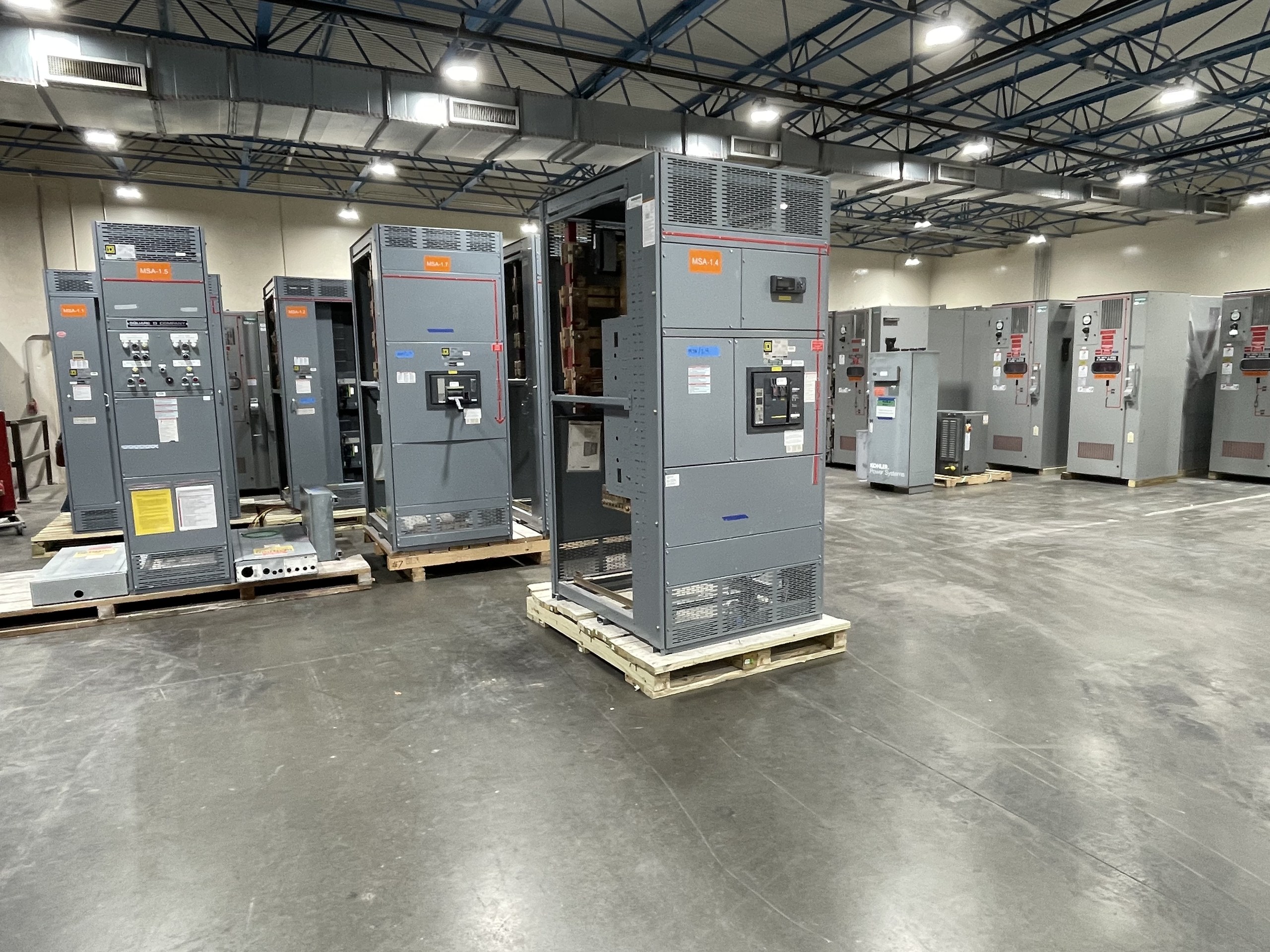
For an Oklahoma project involving power plant teardowns, identify the particular distribution equipment offered and separate it from retained property. We buy used, surplus and decommissioned electrical equipment; we do not sell gear. We consider all voltage classes, subject to review. For a property owner evaluating a mixed surplus lot, the useful starting point is authorization to sell and item-by-item information. Identify what is actually offered, share what is known and leave uncertain details unguessed. An offer depends on the specific equipment, condition, access and agreement between the parties.
Define the plant equipment for sale
A shut-down power plant can contain many assets, so a useful request identifies the particular switchgear and related distribution equipment being offered. Distinguish a lineup from loose breakers, retained equipment and unrelated plant assets, and tie each item to an existing identifier or location. Available records can support the list without proving that every component is present.
Shutdown and sale are not necessarily simultaneous. Note which assets are available now, which are subject to a later project release, and who can authorize the sale. This buyer considers switchgear from shut-down power plants, but the actual offer depends on the equipment, condition, scope, site constraints and mutual agreement.
Plan around release milestones
A project schedule is more useful when it distinguishes an estimated equipment release from an agreed pickup date. For each group, record dependencies such as owner approval, an occupied area, other contractors or a future replacement. Avoid representing a tentative milestone as a confirmed appointment, and tell the buyer when the sequence changes.
Discuss the intended order of payment, qualified disconnects and pickup before accepting an offer. For accepted deals the buyer pays upfront and handles the qualified disconnect and logistics, coordinated with the site. Multiple stages may need separate arrangements; any dates, scope and conditions are subject to agreement rather than a fixed promise.
Check authority over a mixed lot
A property owner evaluating surplus may discover that the building, a tenant and a contractor have different interests in the equipment. Identify the actual owner or authorized seller for each proposed item, and flag known leases, liens or approval requirements. Do not infer that ownership of the building automatically establishes title to every asset inside it.
Make separate entries for different types and locations so that a decision to retain one item does not obscure the rest of the lot. State what is included, excluded or uncertain. The buyer can review the proposed scope once the relevant decision-makers and available records are clear.
If relevant: Show what remains in the lineup
An incomplete lineup is not necessarily a single, uniform item. List the sections that are present, any known missing section, and which breakers or other components are loose, installed, retained or unknown. Give each section an identifier from existing records or a safely accessible exterior label; do not try to open compartments to fill gaps.
Explain whether the missing pieces were removed before the current owner acquired the gear or whether the history is unknown. If the seller wants to retain any sections, mark them as excluded. A buyer can review an incomplete lineup, but completeness, condition and the actual sale scope influence whether an offer is possible.
If relevant: Use alternative records, not guesses
If a nameplate is missing or unreadable, describe the equipment type, number of sections and visible exterior features without asserting a model or rating you cannot verify. Existing purchase records, asset tags, one-line drawings or earlier photographs may help identify the item. Say which source supplied each detail and whether the source is current.
Do not open a cover or approach energized equipment to search for a hidden label. A safely accessible overall photograph, a location in the inventory and an honest unknown can be enough to start a conversation. The buyer may request further information, and the lack of a nameplate may affect the review.
Record facts and unknowns separately
A practical equipment list can be short: type, quantity, location, any known manufacturer and ratings, and whether the item is still installed or stored. Add section counts or related loose items where relevant. The same manufacturer may appear on several distinct assemblies, so match labels and records to the right line rather than combining unlike items.
Note visible exterior damage, missing components and the limits of the available history. Do not claim a device works simply because its exterior looks intact. Existing documentation and safely accessible photos help a buyer review the inventory, but a seller is never asked to open, operate or test equipment for this request.
Set the sale scope and release date
Identify who owns the equipment and who is authorized to agree to a sale. Note any known lease, lien, retained component or approval that could limit the proposed transaction. If the equipment is on more than one property, keep each site and contact separate. A property owner's name does not automatically establish ownership of every piece of gear.
Explain whether the equipment is available now or expected after a project milestone. A tentative release date is not a scheduled pickup, and a list submitted for review is not a completed deal. If a component is later retained or an approval remains outstanding, update the buyer before finalizing the included equipment and timing.
Review the offer against the list
Equipment of all voltage classes may be considered, whether used, surplus or decommissioned. The business buys equipment and does not sell it; examples of sources it considers include decommissioned data centers and shut-down power plants. Interest and pricing depend on the actual equipment, condition, proposed scope and review, not merely on a title or a single rating.
When an offer is made, compare its included items and exclusions with the current inventory. For an agreed deal, the buyer pays upfront before pickup. Confirm the agreed price, payment method and any dependencies with the authorized seller, and resolve discrepancies before treating the transaction or pickup schedule as final.
Coordinate the physical handoff
For accepted deals, the buyer handles crane, rigging, qualified disconnects, loading, freight and hauling. The seller does not have to test, disconnect, lift or load the equipment. Explain whether the gear remains installed or is already stored and provide the site contact, actual access rules and known constraints so the buyer can plan the agreed work.
Existing dimensions, weights and photographs may help if they are available, but mark estimates and unknowns honestly. The buyer and site contact coordinate the details for the actual property and deal; a particular crane, route or pickup date is not assumed. Do not approach energized equipment or perform electrical work to prepare a quote.