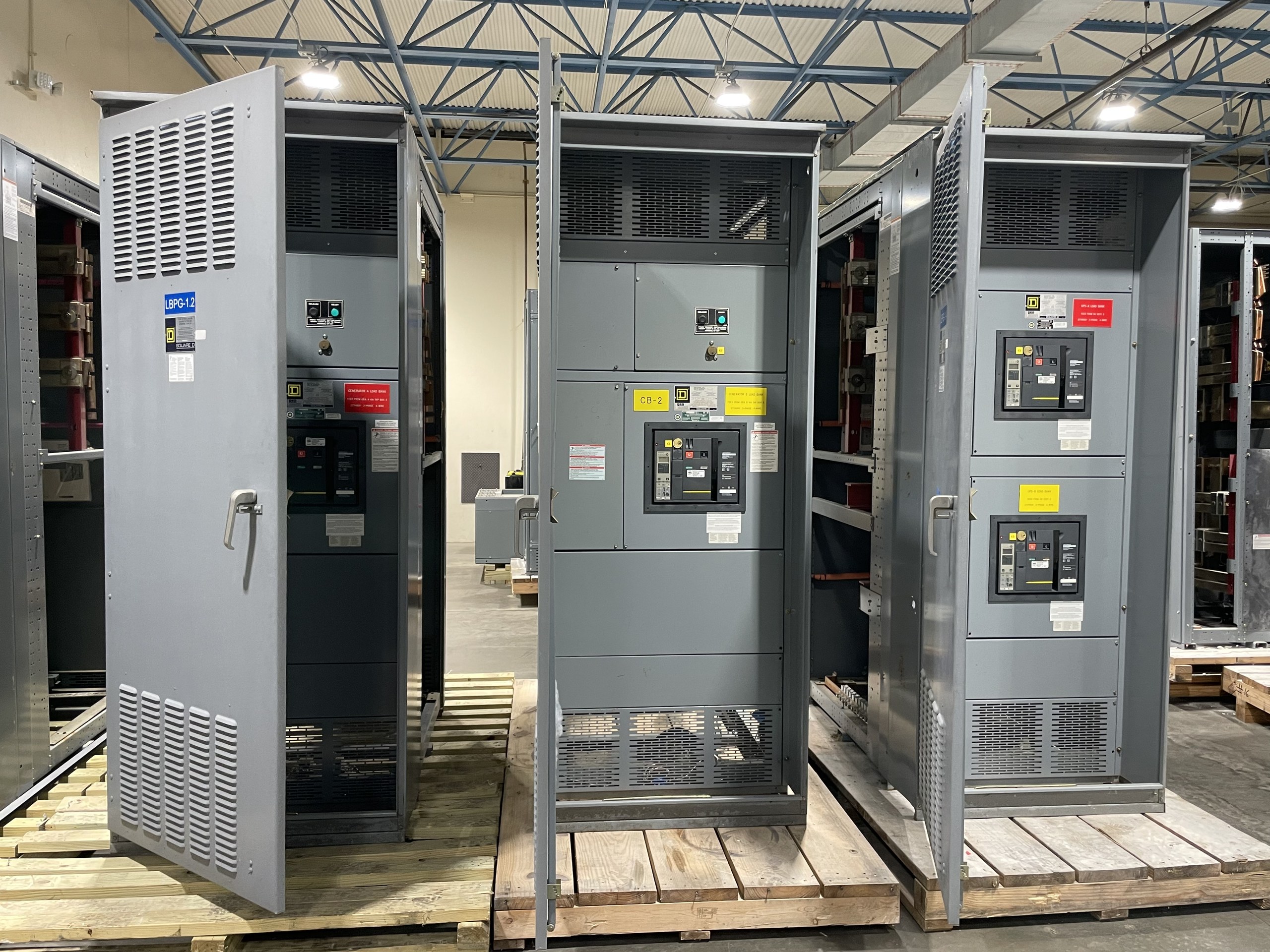
A business with switchgear or other distribution equipment in Haskell County, Oklahoma, can request a review of its proposed surplus and discuss pickup directly. For example, if the lot includes electrical switchgear, distinguish those assets from other items and describe their actual location. We buy used, surplus and decommissioned electrical equipment; we do not sell gear. We consider all voltage classes, subject to review. For a maintenance planner cataloging retired distribution assets, the useful starting point is component identification, observed condition and records availability. Identify what is actually offered, share what is known and leave uncertain details unguessed. An offer depends on the specific equipment, condition, access and agreement between the parties.
If your Haskell County inventory includes electrical switchgear
Switchgear is generally identified as a group of protective and switching equipment, often arranged in sections. Describe the lineup as a whole, but list distinct sections and loose breakers separately when you can. Existing records or an exterior view may show the manufacturer, model, ratings and section count. A single photograph of a long lineup may not show everything included.
State whether the lineup is still installed or has already been removed, and identify any obviously absent sections or loose components. Use words such as unknown when you cannot verify a detail. A buyer needs to understand the actual scope, not assume that every compartment is complete or that a label on one breaker describes the entire lineup.
Catalog retired distribution assets
A maintenance planner can start with an existing equipment register and identify the retired distribution assets proposed for sale. Record the type, tag, known manufacturer and quantity, then distinguish a complete assembly from loose parts. Explain whether the gear is still installed or has already been removed without making a claim about electrical condition.
If a label or record is missing, say what is unknown and share whatever can be documented from a safe, accessible position. Maintenance history may be useful when available, but testing and disconnection are not seller requirements. Corrections to a register should be shared before the parties finalize the scope.
If relevant: Distinguish unused from unverified
Unused surplus and used equipment may appear together after a project. Explain the basis for an unused description, such as an existing inventory record, and disclose whether original packaging has been opened or the storage history is incomplete. Packaging alone does not prove the condition, completeness or operating status of an item.
List quantities, manufacturer and identifiable ratings separately for each group. Note any missing accessories or documentation and mark uncertainty explicitly. The buyer can review the inventory without asking the seller to energize or test a device; an offer depends on the actual items and the agreement reached.
If relevant: Verify what was actually acquired
Electrical equipment left after an auction may not all have the same owner or sale status. Compare the items you intend to offer with your purchase records and confirm the authority to sell them. Identify lot numbers where available, but do not assume an auction description proves the equipment's present condition or completeness.
List what remains at each location, including any known exclusions or components already removed. Share accessible photos and existing labels, and identify unknowns rather than reconstructing missing history. The buyer reviews the actual equipment and access arrangements; an earlier auction result is not a promise of a later offer.
Link records to the actual equipment
An asset tag or existing inventory number can connect a description, photograph and location without turning every item into a separate narrative. Give quantities and identify what is included, excluded or missing. Manufacturer and model are helpful when known, while voltage and amperage should be associated with the particular label or device they describe.
Safe exterior photos and existing documents may provide a useful starting point. A drawing can be out of date and one breaker label does not necessarily describe a whole lineup, so identify the source of each claim. If the label cannot be reached safely or the history is uncertain, tell the buyer rather than guessing.
Keep the proposed lot current
A useful scope lists quantities and locations along with retained or missing sections, loose items and known ownership restrictions. Confirm that the person discussing the transaction has authority to sell the listed property. If equipment belongs to multiple parties, explain the separate approvals instead of treating all assets as automatically available.
Availability may change during a shutdown or facility upgrade. Record which groups are ready, which depend on a future release, and which have uncertain dates. Share revisions when the list changes, and review the final offer against the latest version so that both sides understand exactly what is covered.
From review to an agreed offer
This is a buying-only business; it does not sell electrical equipment. It considers used, surplus and decommissioned gear across all voltage classes, including switchgear from decommissioned data centers and shut-down power plants. A buyer reviews the actual equipment, condition, information and proposed scope before deciding whether to make an offer; no individual item is guaranteed acceptance.
If the parties agree on a deal, the buyer pays upfront before pickup. Confirm the agreed price, payment method, items included, any exclusions and timing with the authorized seller. A preliminary inquiry or estimate is not a completed transaction. Ask for clarification before accepting an offer if the proposed scope or payment terms are unclear.
Coordinate the physical handoff
For accepted deals, the buyer handles crane, rigging, qualified disconnects, loading, freight and hauling. The seller does not have to test, disconnect, lift or load the equipment. Explain whether the gear remains installed or is already stored and provide the site contact, actual access rules and known constraints so the buyer can plan the agreed work.
Existing dimensions, weights and photographs may help if they are available, but mark estimates and unknowns honestly. The buyer and site contact coordinate the details for the actual property and deal; a particular crane, route or pickup date is not assumed. Do not approach energized equipment or perform electrical work to prepare a quote.