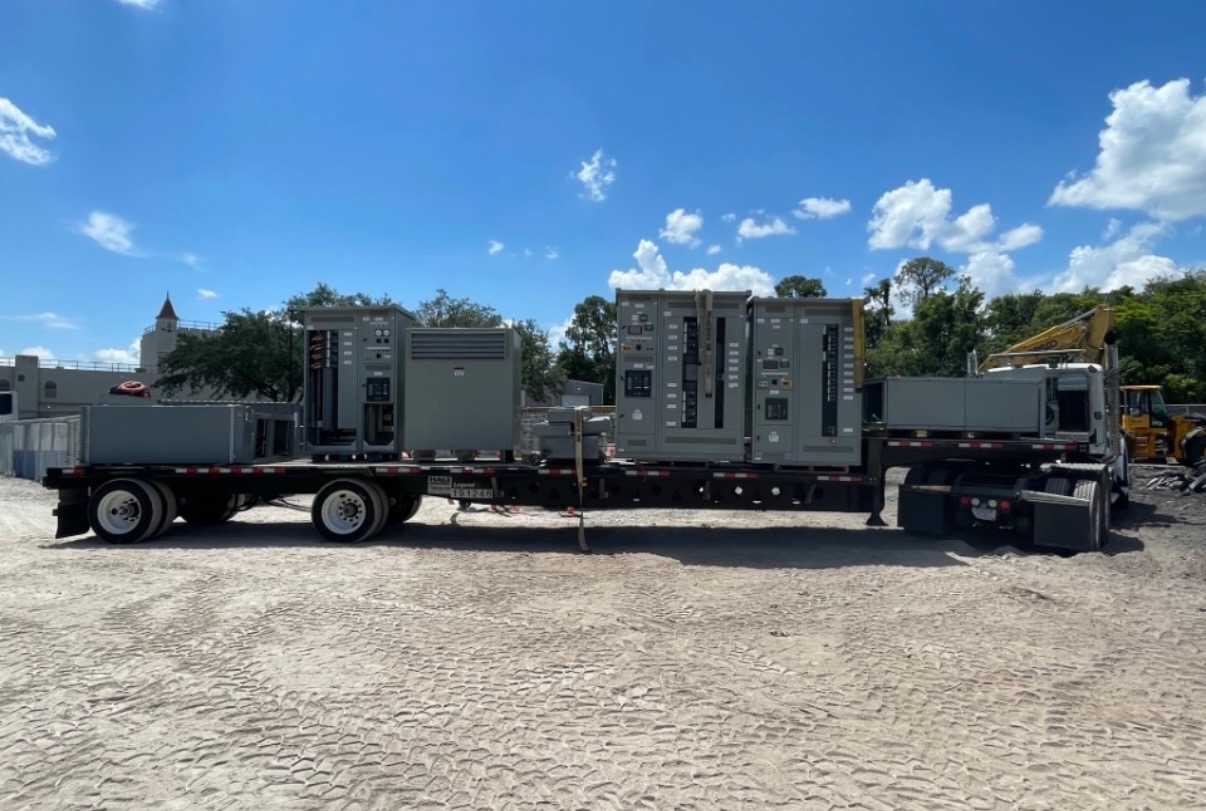
A business with switchgear or other distribution equipment in Caddo County, Oklahoma, can request a review of its proposed surplus and discuss pickup directly. For example, if the lot includes automatic transfer switches (ATS), distinguish those assets from other items and describe their actual location. We buy used, surplus and decommissioned electrical equipment; we do not sell gear. We consider all voltage classes, subject to review. For a site owner preparing several equipment groups for disposition, the useful starting point is inventory clarity, release dates and transaction authorization. Identify what is actually offered, share what is known and leave uncertain details unguessed. An offer depends on the specific equipment, condition, access and agreement between the parties.
Describe the switchgear lineup
Switchgear is generally identified as a group of protective and switching equipment, often arranged in sections. Describe the lineup as a whole, but list distinct sections and loose breakers separately when you can. Existing records or an exterior view may show the manufacturer, model, ratings and section count. A single photograph of a long lineup may not show everything included.
State whether the lineup is still installed or has already been removed, and identify any obviously absent sections or loose components. Use words such as unknown when you cannot verify a detail. A buyer needs to understand the actual scope, not assume that every compartment is complete or that a label on one breaker describes the entire lineup.
If your Caddo County inventory includes automatic transfer switches (ATS)
An automatic transfer switch is associated with transferring a load between power sources. For a sale, identify each available unit by the manufacturer, model, ratings and quantity when those details are visible or already recorded. Note whether the switch is installed or separately stored, and distinguish the switch enclosure from other nearby distribution gear.
Existing paperwork may identify a transfer arrangement, but a seller should not claim that a unit operates correctly without evidence. Describe known missing components or exterior damage and mark other condition questions as unknown. There is no need to operate a transfer switch or simulate an outage for this buyer to consider the equipment.
Organize several equipment groups
A site owner can divide a proposed disposition into identifiable equipment groups with quantities, locations and release status. Note whether an item is installed or already removed and identify the person who can authorize the sale. Explicitly list retained components so that a discussion about one assembly does not inadvertently include another.
Different groups may have different dates or access constraints. A simple revision date on the inventory makes it easier to see which information is current. Share existing records and safe exterior photos where available, and tell the buyer when ownership, condition or availability is not yet confirmed.
If relevant: Reconcile stock across projects
A contractor may have equipment from completed jobs, returns and warehouse stock. Group the items by actual owner and location before combining them into a sale list. Identify each assembly or breaker group by quantity, known manufacturer and visible or recorded rating, and identify items still allocated to a customer or future project.
Use existing job records to clarify origin without treating a project name as proof of ownership. Note which items are used, unused or of uncertain history and what documentation follows them. The buyer can review mixed stock, but authorization, the specific equipment and site access remain important to an offer.
If relevant: Separate brands and assemblies
For a mixed-brand lot, record the manufacturer shown for each assembly and, where known, for each separately listed breaker or accessory. Equipment near a branded lineup is not automatically made by the same company. Connect a photo or existing label to its own inventory line and mark unreadable names as unknown.
Describe whether components are installed or loose and avoid claiming interchangeability merely because ratings look similar. Group identical items only when their available identifiers and condition descriptions actually match. A mixed list can be submitted together, but the buyer evaluates the scope and may not offer on every piece.
Record facts and unknowns separately
A practical equipment list can be short: type, quantity, location, any known manufacturer and ratings, and whether the item is still installed or stored. Add section counts or related loose items where relevant. The same manufacturer may appear on several distinct assemblies, so match labels and records to the right line rather than combining unlike items.
Note visible exterior damage, missing components and the limits of the available history. Do not claim a device works simply because its exterior looks intact. Existing documentation and safely accessible photos help a buyer review the inventory, but a seller is never asked to open, operate or test equipment for this request.
Set the sale scope and release date
Identify who owns the equipment and who is authorized to agree to a sale. Note any known lease, lien, retained component or approval that could limit the proposed transaction. If the equipment is on more than one property, keep each site and contact separate. A property owner's name does not automatically establish ownership of every piece of gear.
Explain whether the equipment is available now or expected after a project milestone. A tentative release date is not a scheduled pickup, and a list submitted for review is not a completed deal. If a component is later retained or an approval remains outstanding, update the buyer before finalizing the included equipment and timing.
From review to an agreed offer
This is a buying-only business; it does not sell electrical equipment. It considers used, surplus and decommissioned gear across all voltage classes, including switchgear from decommissioned data centers and shut-down power plants. A buyer reviews the actual equipment, condition, information and proposed scope before deciding whether to make an offer; no individual item is guaranteed acceptance.
If the parties agree on a deal, the buyer pays upfront before pickup. Confirm the agreed price, payment method, items included, any exclusions and timing with the authorized seller. A preliminary inquiry or estimate is not a completed transaction. Ask for clarification before accepting an offer if the proposed scope or payment terms are unclear.
Prepare the handoff, not the equipment
For an accepted deal, the buyer takes responsibility for qualified disconnects, crane, rigging, loading, freight and hauling. Sellers are not expected to test, disconnect or physically move equipment. Identify the site contact, the equipment's present location and any known access or other-work constraints that could affect coordination.
If site records include dimensions, weights or photographs, share the relevant information and explain its source. Unknowns are acceptable and can be discussed with the buyer. The actual plan and date depend on the accepted scope and site conditions; never approach energized equipment or open a cover to obtain missing details.