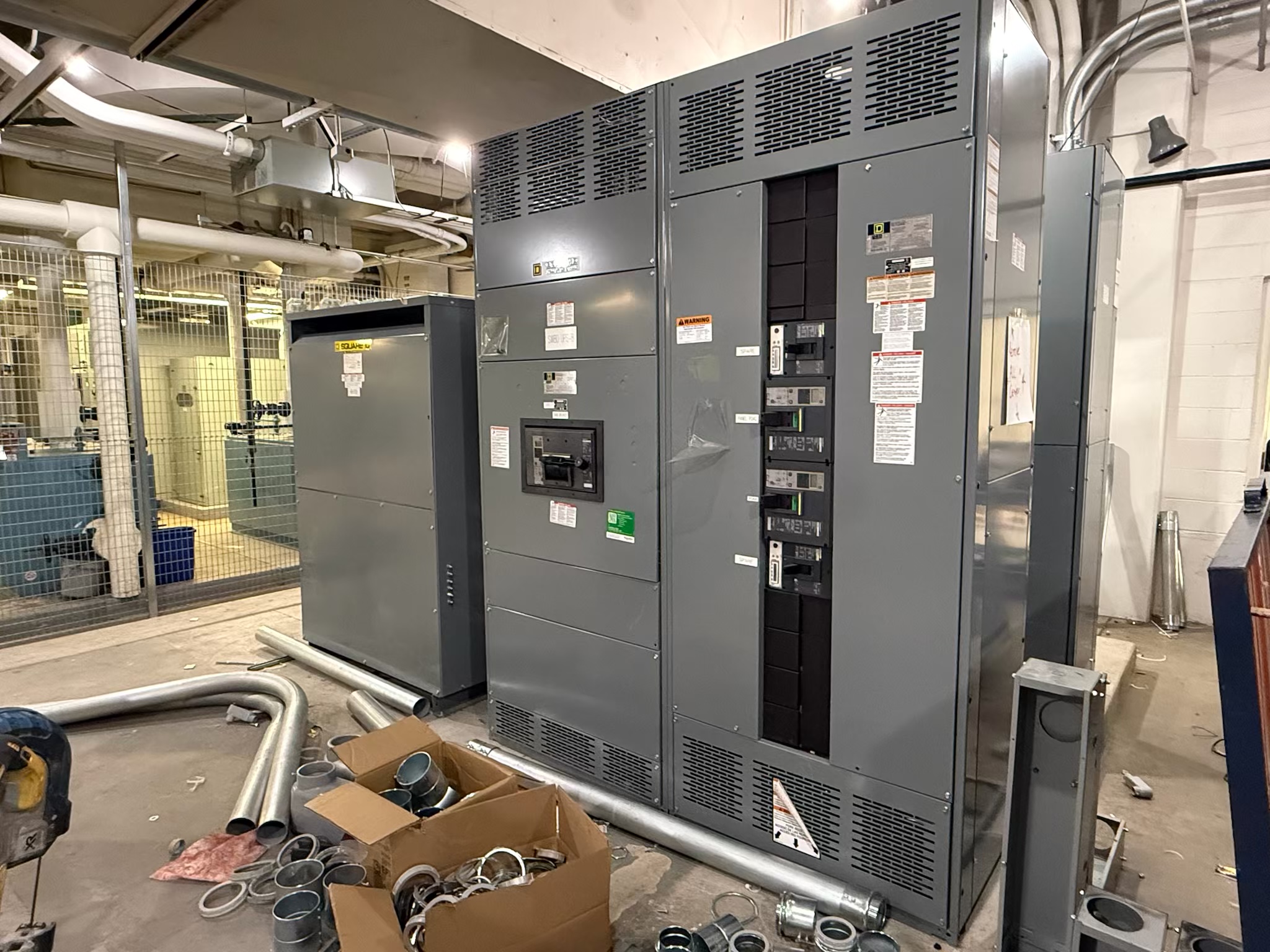
A business considering the sale of electrical gear identified as Allen-Bradley can begin with the markings and records it already has. We buy used, surplus and decommissioned electrical equipment; we do not sell gear. We consider all voltage classes, subject to review. For a consultant creating a closeout package for the owner, the useful starting point is available records, scope of sale and clear contact information. Identify what is actually offered, share what is known and leave uncertain details unguessed. An offer depends on the specific equipment, condition, access and agreement between the parties.
Identify the manufacturer and the actual item
For equipment identified as Allen-Bradley, use the name shown on an existing record or safely accessible exterior label. Write down the equipment type, model and ratings when available, and match the information to the correct assembly or loose component. For a control or distribution assembly, distinguish the identity of the overall unit from the identity of any loose components offered with it. A maker's name alone does not establish the item's complete identity or value.
If a Allen-Bradley label is missing or cannot be read safely, share any existing purchase record, asset register or previous photograph and state its limitations. Do not open covers or approach energized equipment to locate another label. This is an independent buying service, not a claim of manufacturer affiliation, current support, compatibility or acceptance of every item.
Make existing identifiers useful
A useful identifier is tied to the item it actually describes. Note where a visible nameplate appears, transcribe the markings you can read, and associate each photograph or document with an inventory number. Manufacturer, model, ratings and quantity are useful when available, but a missing field is better labeled unknown than guessed.
Take photos only from a safe, accessible position and never approach energized equipment to obtain a label. If an existing drawing or asset register disagrees with a visible identifier, send both and explain the discrepancy. The buyer can review available information; identification is not a request to test, open or dismantle anything.
Prepare an owner’s closeout package
A consultant assembling a closeout package can connect the proposed sale inventory to existing asset records, photographs and project contacts. Record the source and date of each available document and identify omissions. This is a way to organize existing information, not a request to certify electrical condition or create new test results.
Make the boundary of the sale visible to the owner: equipment included, exclusions, location and any approvals still outstanding. Identify the person authorized to negotiate. If later documents contradict the first list, pass the discrepancy to the buyer instead of presenting an uncertain detail as settled.
If relevant: Plan for separate release dates
When equipment becomes available in stages, identify each group and its tentative release date rather than treating the whole inventory as ready now. Note dependencies such as owner approval, another contractor's schedule or equipment that must remain in service. If a date is uncertain, label it as an estimate and update the buyer when it changes.
Clarify whether the proposed transaction covers all stages or only a particular group. An accepted deal should establish the agreed scope, upfront payment and a coordination plan for the buyer-handled qualified disconnects and logistics. Do not assume that separate sites or later stages automatically share one pickup appointment.
If relevant: Reconcile stock across projects
A contractor may have equipment from completed jobs, returns and warehouse stock. Group the items by actual owner and location before combining them into a sale list. Identify each assembly or breaker group by quantity, known manufacturer and visible or recorded rating, and identify items still allocated to a customer or future project.
Use existing job records to clarify origin without treating a project name as proof of ownership. Note which items are used, unused or of uncertain history and what documentation follows them. The buyer can review mixed stock, but authorization, the specific equipment and site access remain important to an offer.
Make the inventory easy to review
Begin with one line for each assembly or clearly identifiable group. Record the equipment type, quantity, site, installed or stored status, and the manufacturer, model, voltage and amperage where known. For a lineup, say how many sections are included and distinguish loose components from installed ones. The buyer needs to know which facts describe which item.
Use existing nameplate photos, asset registers or drawings where available, and label the source of uncertain details. If a record is old or conflicts with a safely accessible exterior label, send both and explain the difference. Missing information can remain unknown; there is no reason to open equipment, approach energized gear or test it for a quote.
Set the sale scope and release date
Identify who owns the equipment and who is authorized to agree to a sale. Note any known lease, lien, retained component or approval that could limit the proposed transaction. If the equipment is on more than one property, keep each site and contact separate. A property owner's name does not automatically establish ownership of every piece of gear.
Explain whether the equipment is available now or expected after a project milestone. A tentative release date is not a scheduled pickup, and a list submitted for review is not a completed deal. If a component is later retained or an approval remains outstanding, update the buyer before finalizing the included equipment and timing.
Review the offer against the list
Equipment of all voltage classes may be considered, whether used, surplus or decommissioned. The business buys equipment and does not sell it; examples of sources it considers include decommissioned data centers and shut-down power plants. Interest and pricing depend on the actual equipment, condition, proposed scope and review, not merely on a title or a single rating.
When an offer is made, compare its included items and exclusions with the current inventory. For an agreed deal, the buyer pays upfront before pickup. Confirm the agreed price, payment method and any dependencies with the authorized seller, and resolve discrepancies before treating the transaction or pickup schedule as final.
Coordinate the physical handoff
For accepted deals, the buyer handles crane, rigging, qualified disconnects, loading, freight and hauling. The seller does not have to test, disconnect, lift or load the equipment. Explain whether the gear remains installed or is already stored and provide the site contact, actual access rules and known constraints so the buyer can plan the agreed work.
Existing dimensions, weights and photographs may help if they are available, but mark estimates and unknowns honestly. The buyer and site contact coordinate the details for the actual property and deal; a particular crane, route or pickup date is not assumed. Do not approach energized equipment or perform electrical work to prepare a quote.